Embedded C
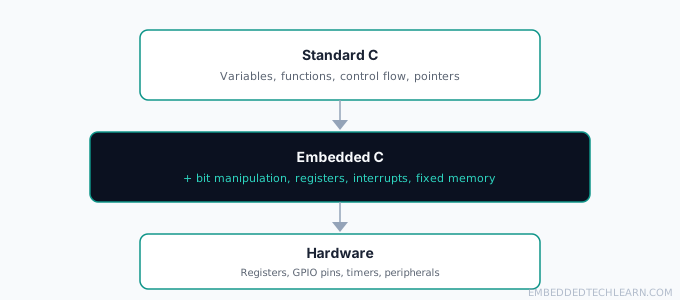
Embedded C is standard C with one major addition: direct control over real hardware, registers, pins, timers, and peripherals, usually with no operating system standing in the way. It's the language actually running inside most microcontrollers, from a washing machine's cycle controller to a car's anti-lock braking system, and it's the practical, day-to-day skill behind embedded systems, IoT, and firmware work.
This section covers what changes when C moves from a desktop OS onto a microcontroller: tighter memory, direct register access, and code that has to run correctly with no process boundary to contain a mistake. It builds directly on the Computer Architecture series, understanding the CPU, memory, and bus model there is what makes register-level embedded C actually make sense instead of feeling like arbitrary rules.
Where to Start
Start with What Is Embedded C? A Complete Guide for the full picture, what makes it different, its core features, and real (compiled and verified) code. Then read C vs. Embedded C: What Actually Changes for the detailed side-by-side, memory, hardware access, and performance. More tutorials covering pointers, bit manipulation, registers, GPIO, and interrupts are actively being added, this is a growing section, not a finished one.
 Embedded C
What Is Embedded C? A Complete Guide
Embedded C adds direct hardware control to standard C. Learn what makes it different, its core features, and how it actually looks in a real program.
 Embedded C
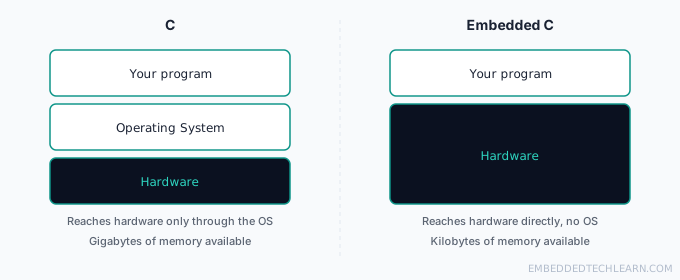
C vs. Embedded C: What Actually Changes
Same language, different job. See exactly how memory, hardware access, and execution environment separate ordinary C from Embedded C, with real code.